Paper · PDF · 8 pages
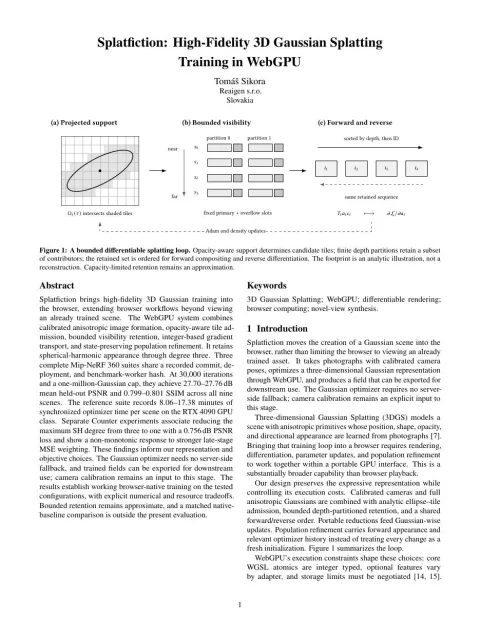
Splatfiction: High-Fidelity 3D Gaussian Splatting Training in WebGPU
Training 3D Gaussian scenes directly in the browser with WebGPU, with no server-side fallback. Evaluated on the Mip-NeRF 360 benchmark.
The technology behind Reaigen’s 3D tours: a working prototype of live, feed-forward 3D reconstruction from a camera stream, and our research papers.
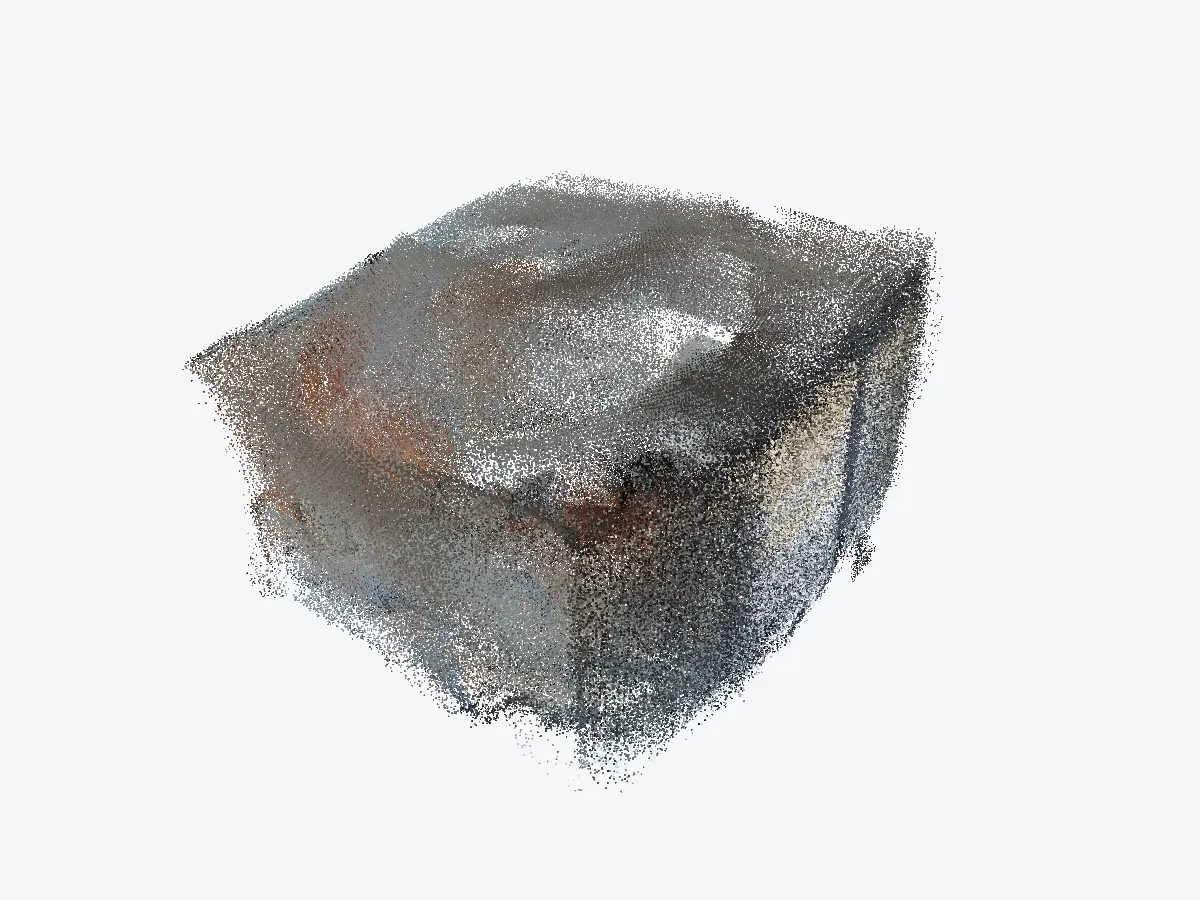
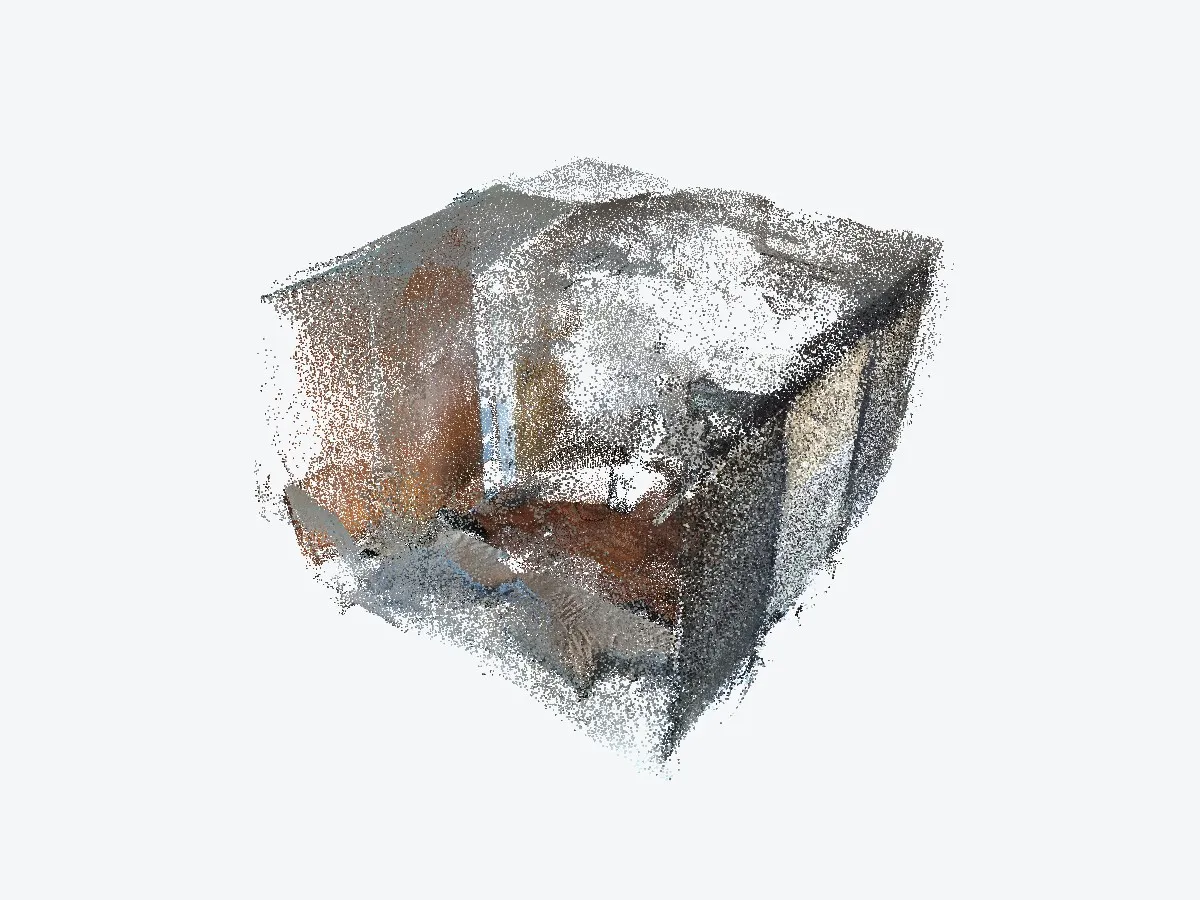
Walk through a home with a phone and watch it become 3D as you go. Our Reaigen-VGGT prototype builds the scene from what the camera sees in real time: images stream straight into the model, which adds each one to the 3D in a single feed-forward pass. It doesn’t wait for the whole capture to be collected and solved together, and it needs no depth sensor.
The apartment was scanned with an iPhone 15 Pro, the room with a Samsung Galaxy S24. Press play to watch the scan build up with the camera positions, then drag to look around. Research prototype.
Reaigen-VGGT is a prototype that already does the heavy lifting of turning a camera stream into 3D. By default it is not yet precise to 1 mm, so repair tightens the result: it corrects the camera layout and removes doubled surfaces, and the same scan comes out as one clean scene.
After the scan, Spinoff takes over. It is our own rendering engine for Gaussian splats: it draws scenes of millions of splats in real time directly in the browser, and brings the same spaces at full scale to Apple Vision Pro.
This runs live in your browser: pick a scene, drag to look around and use W, A, S and D to move. The coastline has 10 million splats and is a 133 MB download. Marienplatz and the Graz church are from TerraSky3D (D’Urso et al., TU Graz / Sony, CC BY 4.0); Garden, Kitchen, Room, Counter, Bicycle, Stump and Treehill are from the Mip-NeRF 360 benchmark.
Training 3D Gaussian scenes directly in the browser with WebGPU, with no server-side fallback. Evaluated on the Mip-NeRF 360 benchmark.
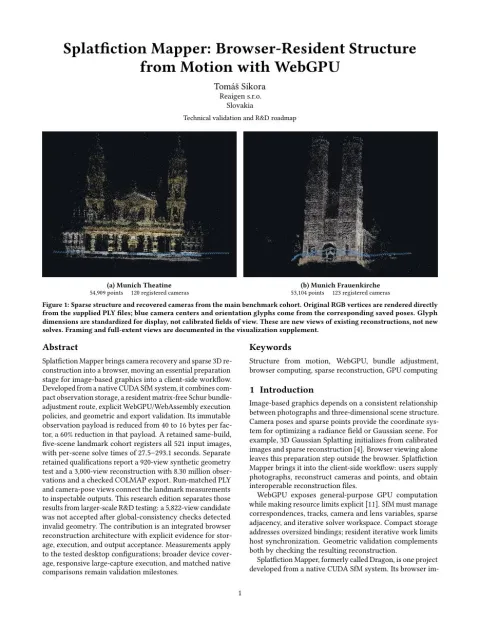
Camera recovery and sparse 3D reconstruction from photographs, running in the browser on WebGPU.
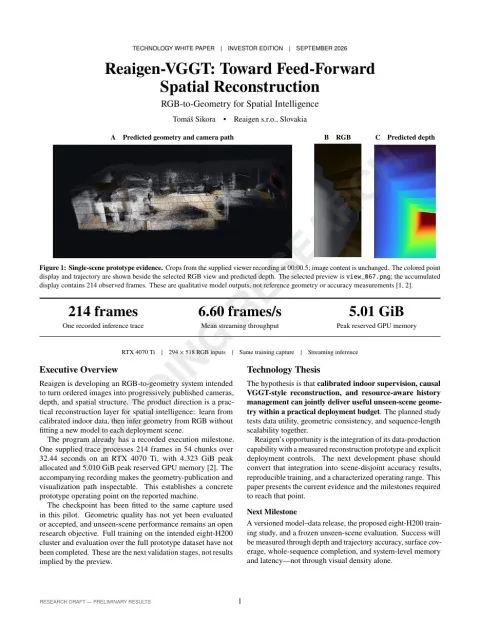
Ongoing research into turning ordered RGB images into cameras, depth and spatial structure without fitting a new model to each scene.
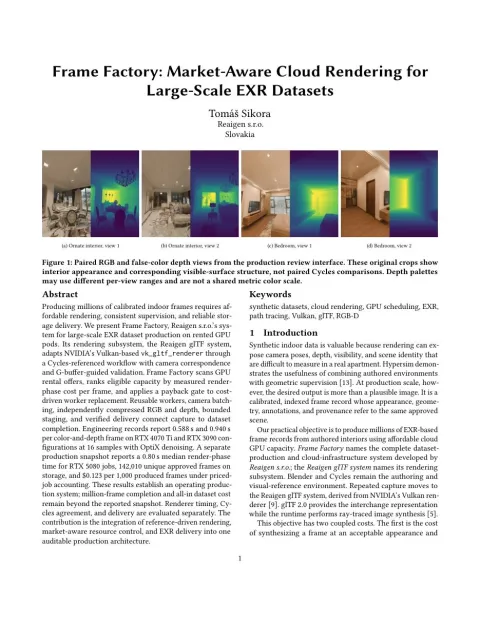
Reaigen’s system for rendering large EXR datasets of interiors on rented cloud GPUs, choosing capacity by measured cost per frame.